Private Forest Expansion and Climate Resilience Initiative
Building a greener, more resilient and nature-positive future for The Gambia
Plantation Nurseries' Private Forest Expansion and Climate Resilience Initiative is a long-term programme designed to expand privately managed forests, restore degraded landscapes, conserve biodiversity and strengthen climate resilience across The Gambia.
Building on our experience in nursery production, ecosystem restoration and private forest management, the initiative aims to establish five additional private forests, expanding our portfolio from four existing forests to a network of nine privately managed forests.
Our Approach
We believe that successful forest restoration goes beyond planting trees. Sustainable forests require appropriate land, quality planting materials, water management, protection, maintenance, monitoring and long-term management.
Our approach therefore covers the complete forest development cycle, including:
- Site identification and feasibility assessment
- Forest planning and design
- Indigenous and climate-resilient seedling production
- Land preparation and forest establishment
- Water conservation and irrigation
- Fencing and fire management
- Forest maintenance and replacement planting
- Biodiversity conservation
- Carbon and environmental monitoring
- Community and youth engagement
- Sustainable forest-based enterprise development
Climate and Environmental Impact
The initiative is designed to contribute to climate mitigation and adaptation through increased forest cover, carbon sequestration, restoration of degraded land and improved ecosystem resilience.
Our forests will also provide habitats for biodiversity while supporting soil health, water conservation and ecosystem services.
We will prioritise indigenous, drought-resistant, climate-resilient and multipurpose tree species suited to local environmental conditions.
Communities and Green Livelihoods
The initiative places local communities and young people at the centre of forest restoration.
It will create opportunities in:
- Seedling production
- Nursery management
- Forest establishment
- Forest maintenance
- Fire protection
- Environmental monitoring
- Agroforestry
- Green entrepreneurship
- Nature-based enterprises
Through training, employment and community participation, we aim to ensure that forest restoration generates tangible social and economic benefits alongside environmental outcomes.
Building on Existing Forests
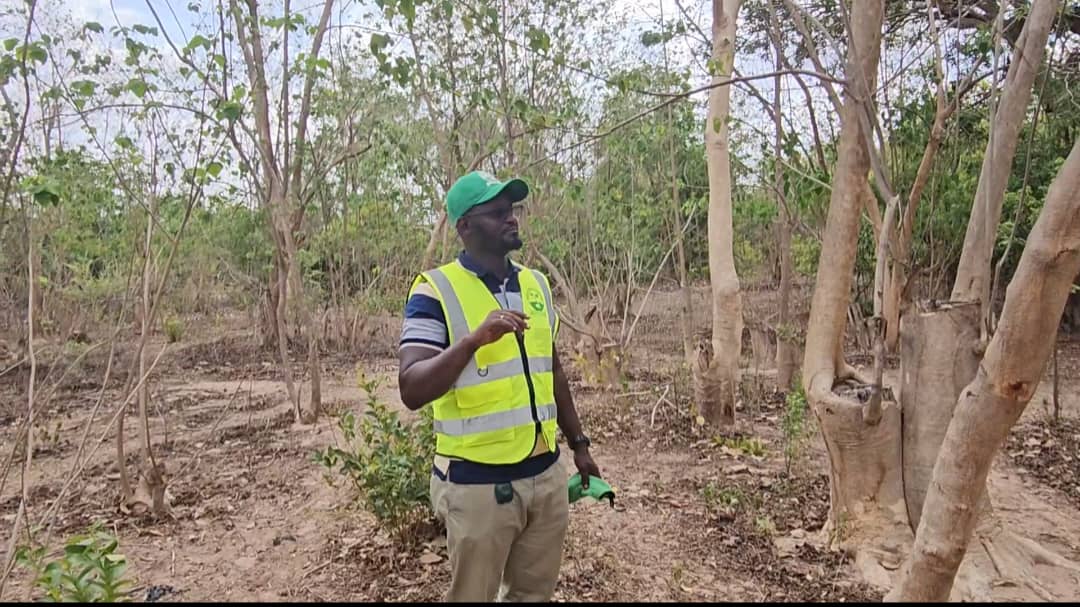
Plantation Nurseries currently manages four private forest sites in the North Bank Region of The Gambia. These forests provide practical experience and serve as demonstration, learning and monitoring sites for the expansion programme.
The new forests will build on lessons from these existing sites, including species performance, forest management, community engagement, protection and long-term maintenance.
A Sustainable Forest Enterprise Model
The initiative is designed to demonstrate that forest restoration can become a long-term environmental and economic asset.
Potential sustainable revenue opportunities include nursery and seedling production, agroforestry, sustainable forest products, ecosystem services, carbon finance and partnerships with responsible private-sector and development organisations.
Where appropriate, revenues generated through forest-related activities can contribute to long-term forest maintenance and the establishment of additional forests.
Our Vision
Our vision is to develop a scalable network of privately managed forests across The Gambia that demonstrates how local enterprise can contribute to climate action, biodiversity conservation, land restoration and sustainable livelihoods.
Through this initiative, Plantation Nurseries is working to transform forest restoration from short-term tree-planting activities into a long-term model for nature, climate resilience and green economic development.
From seedlings to forests. From restoration to resilience. From local action to lasting impact.